Noobenheim News for Nerds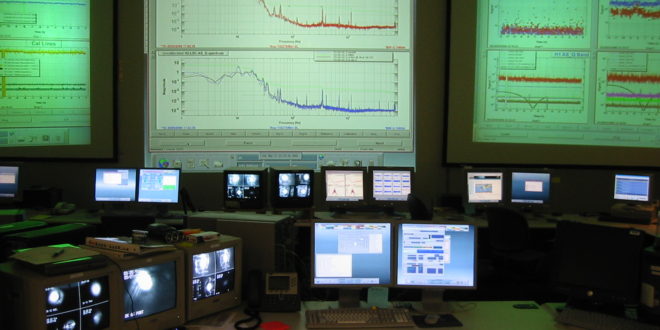
Perhaps the biggest news in science this month, the Laser Interferometer Gravitational-Wave Observatory (LIGO) facility has found evidence for gravitational waves for the second time in history. The team, jointly operated by Caltech and MIT and supported by the U.S. National Science Foundation (NSF), announced earlier this month that they had “caught a second robust signal from two black holes in their final orbits and then their coalescence into a single black hole.” Essentially, they were able to detect two black holes slamming into each other to form one bigger black hole.
Why is this so exciting to scientists? It helps to cement Albert Einstein’s Theory of General Relativity which first predicted such ripples in space-time over one hundred years ago. Up until recently, these events were only ever shown to exist on paper which is why detecting them is such a big deal. As black holes do not emit light in any form, LIGO is the only way we have to directly observe black holes, even from some 1.4 billion light years away, as this event demonstrates.
As we get better at detecting these gravitational waves and the events that cause them, we will gain more knowledge about the mysterious universe around us. Who knows what new frontiers await us now?