Noobenheim News for Nerds
When Niantic broke the nearby footprints in Pokémon GO, fans wanted answers but only heard silence. We were able to at least track Pokémon using some third-party apps such as PokéVision, but then Niantic shut them down too. The creator tweeted how we all felt:
https://twitter.com/YangCLiu/status/759607552313217024
GameSpot seems to agree with this video:
Fans wanted to know why they shut down the helpful tracking services, but Niantic still refused to respond – until now. On Niantic’s blog, CEO John Hanke explains why they had to shut down the third-party trackers, and it really is for good reason: the services were using up too many server resources to continue. Niantic released a graph depicting just how much resources dropped when they shut down these scrapers.
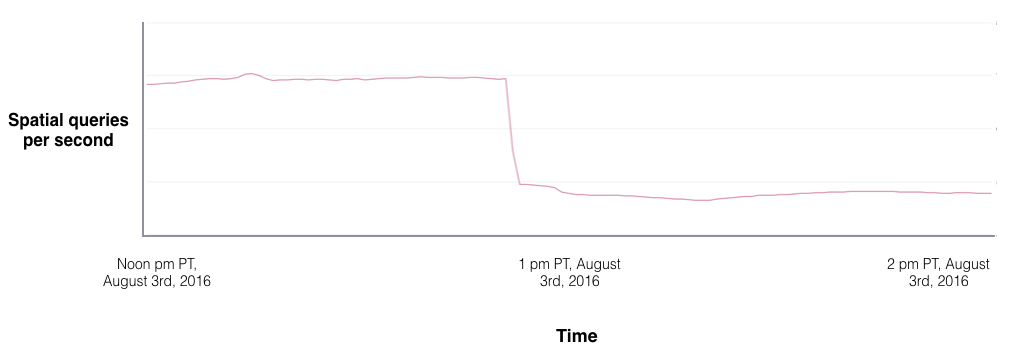
As you can tell, once the scrapers were shut down, the number of queries dropped drastically. Previously, developers were spending their time trying to keep the servers from crashing instead of working on new features and expanding to other countries. Niantic replied on their official Pokémon GO Facebook page as well:
For the record, those scrapers were violating the terms of service as well, so Niantic was within its rights to shut them down. Now we just need them to update the app and give us those new features and bug fixes. Trainers need to get a better tracking system, and I’ve seen quite a few posted that would be amazing to implement.
The entirety of the blog is posted below.
As some of you may have noticed we recently rolled out Pokémon GO to Latin America including Brazil. We were very excited to finally be able to take this step. We were delayed in doing that due to aggressive efforts by third parties to access our servers outside of the Pokémon GO game client and our terms of service. We blocked some more of those attempts yesterday. Since there has been some public discussion about this, we wanted to shed some more light on why we did this and why these seemingly innocuous sites and apps actually hurt our ability to deliver the game to new and existing players. The chart below shows the drop in server resources consumed when we blocked scrapers. Freeing those resources allowed us to proceed with the Latin America launch.
In addition to hampering our ability to bring Pokémon GO to new markets, dealing with this issue also has opportunity cost. Developers have to spend time controlling this problem vs. building new features. It’s worth noting that some of the tools used to access servers to scrape data have also served as platforms for bots and cheating which negatively impact all Trainers. There is a range of motives here from blatant commercial ventures to enthusiastic fans but the negative impact on game resources is the same.
Of course, there are also outright hackers out there attempting to break into systems, hijack social media accounts, and even bring down the service. Some of them have posted publicly about their attempts.
We don’t expect these attempts to stop. But we do want you to understand why we have taken the steps we have and why we will continue to take steps to maintain the stability and integrity of the game.
We value feedback from our community. We have heard feedback about the Nearby feature in the game and are actively working on it. Over the past three and half years many of us in the company have traveled throughout the country and, in fact, around the world to meet, play, and learn from our Ingress user community. And we look forward to doing the same with the Pokémon GO community. Please keep your game ideas and feedback coming. We look forward to getting the game on stable footing so we can begin to work on new features.
Above all, be safe, be nice to your fellow Trainers, and keep on exploring.John Hanke